Tuesday, 25 March 2025

Kronenhof Lodge


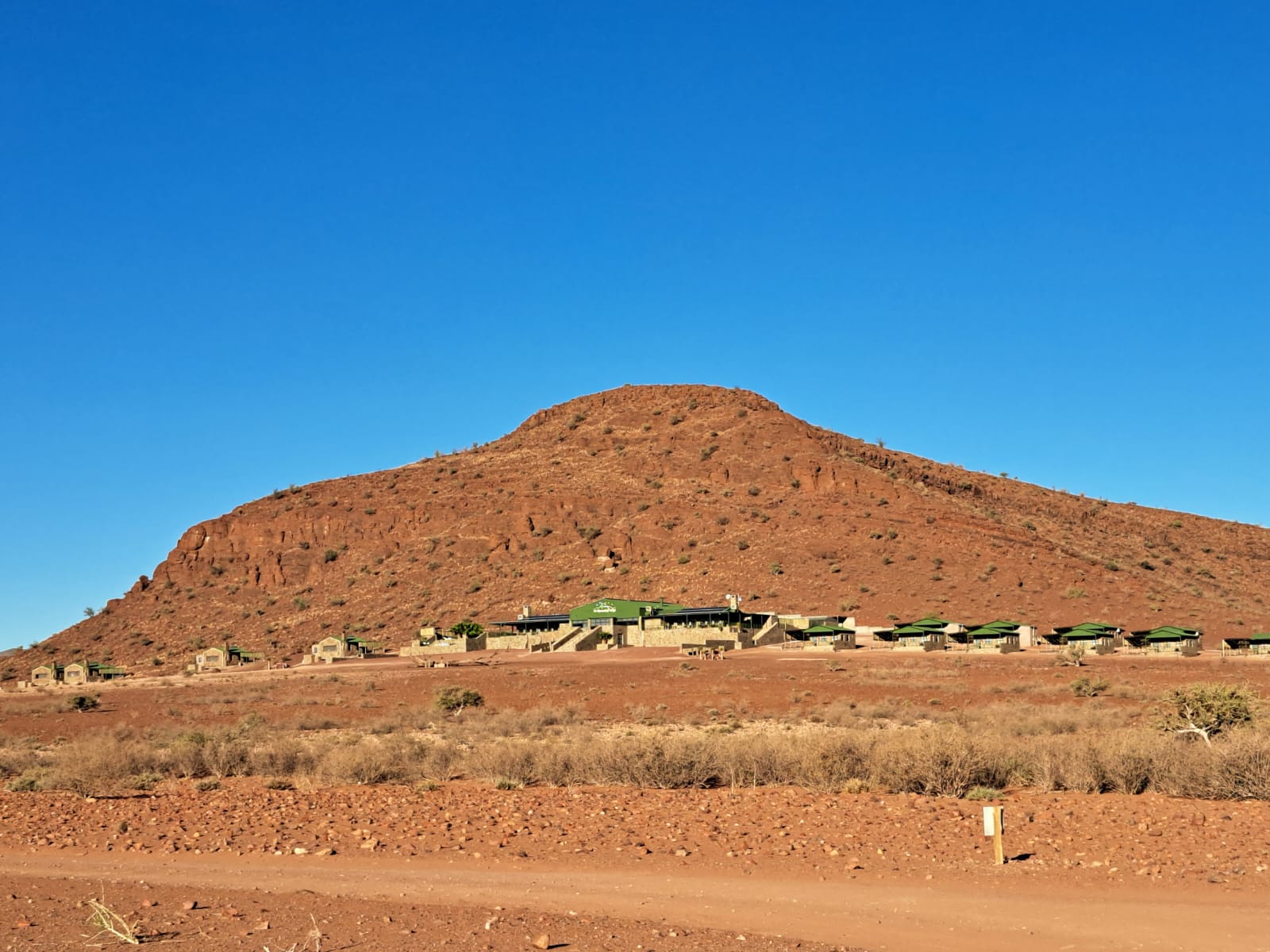
The Kronenhof Lodge


The view.
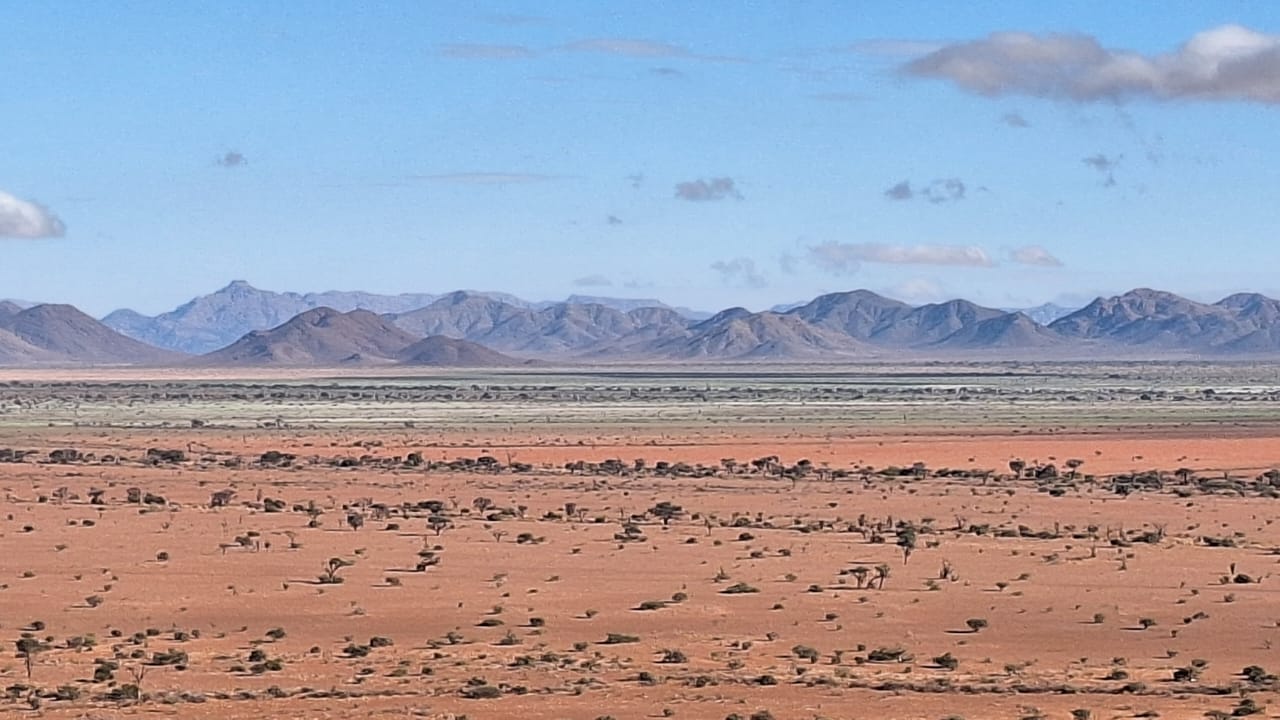

We drove just over 130 kms north along a scenic gravel road to Kronenhof Lodge,which is around 10 kms down a dirt track away from the road. We arrived on 16th March for a three night stay. The lodge is very nice indeed & is perched half way up a small hillside giving panoramic views of this desolate area. The farm is around 9,000 hectares with an adjoining farm of another 10,000 hectares,which we didn't visit. 


They had internet connection so we both spent quite a lot of time on our computers. Me trying to get my blog up to date (an impossible task) & Delana with work. So we probably didn't do this area justice. It is a rather bleak area at the northern edge of the Tiras Mountains (which are much smaller here than further south).


As Delana stated this was one of the best campsites that we have stayed at. If not the best. It made staying here an absolute pleasure.


Some of the more rocky terrain was quite challenging to drive. The open plains were easy to traverse & there were several areas of sand dunes which were the home of the Dune Lark. The area we saw this species in was quite small & isolated & it makes one wonder how this species found this very specialised habitat.

\
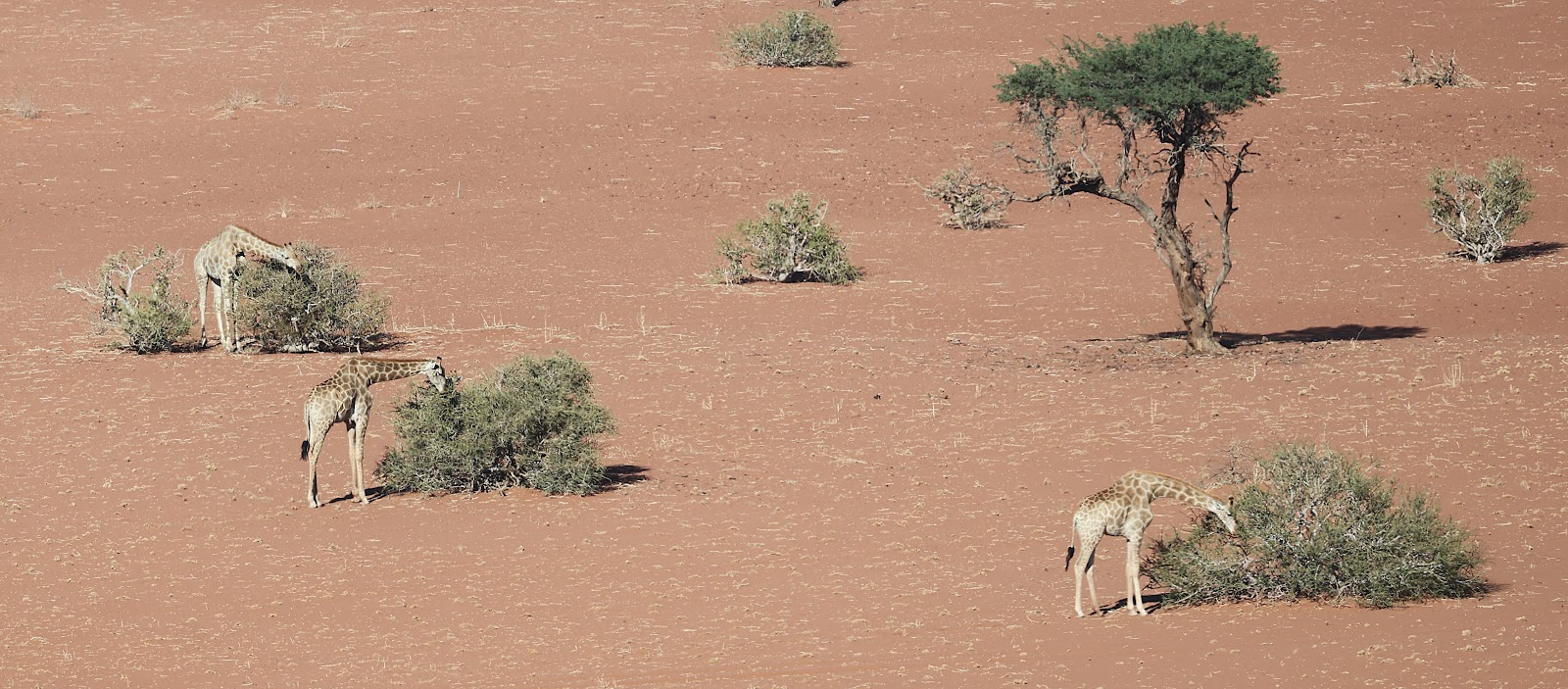
Giraffe

These desert adapted Giraffes are very hardy 
& thrive in this harsh environment.


Kalahari Scrub Robin

Dune Lark singing.


This species is very habitat restricted, 
needing well vegetated red sand dunes.


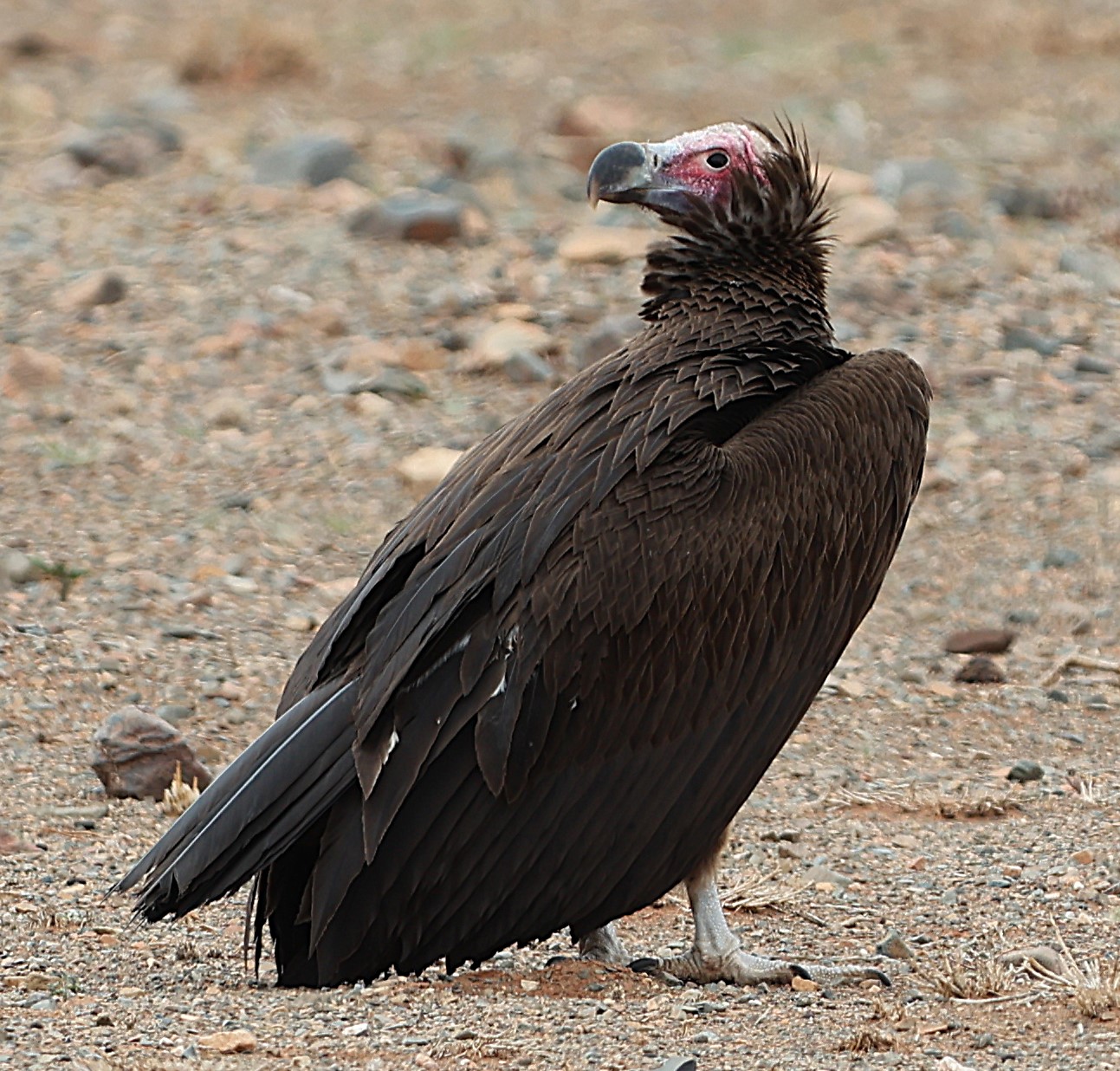
Lappet-faced Vultures. 
Notice the wing-tagged bird on the left.


White-backed Vulture

Gemsbok looking on.

Black-backed Jackal

On leaving the lodge, we came across eleven Lappet-faced & three White-backed Vultures just sitting on a bare patch of desert next to the road. There appeared to be no kill, but both a Gemsbok & Black-backed Jackal looked on. Very strange, perhaps we just didn't see the kill? Quite a few Lappet-faced Vultures have been yellow wing-tagged by the Namibian Conservation Department. We couldn't see any number on the tag, but we will inform them of our sighting & where the bird was.

We really enjoyed our stay here although we didn't see many birds or animals. The highlight being the sighting of Dune Lark. However, what made the place so special was the superb campsite & the hospitality of the lodge manager. They we very helpful & informative about the area & the food wasn't bad either! An excellent few days was enjoyed by the both of us.














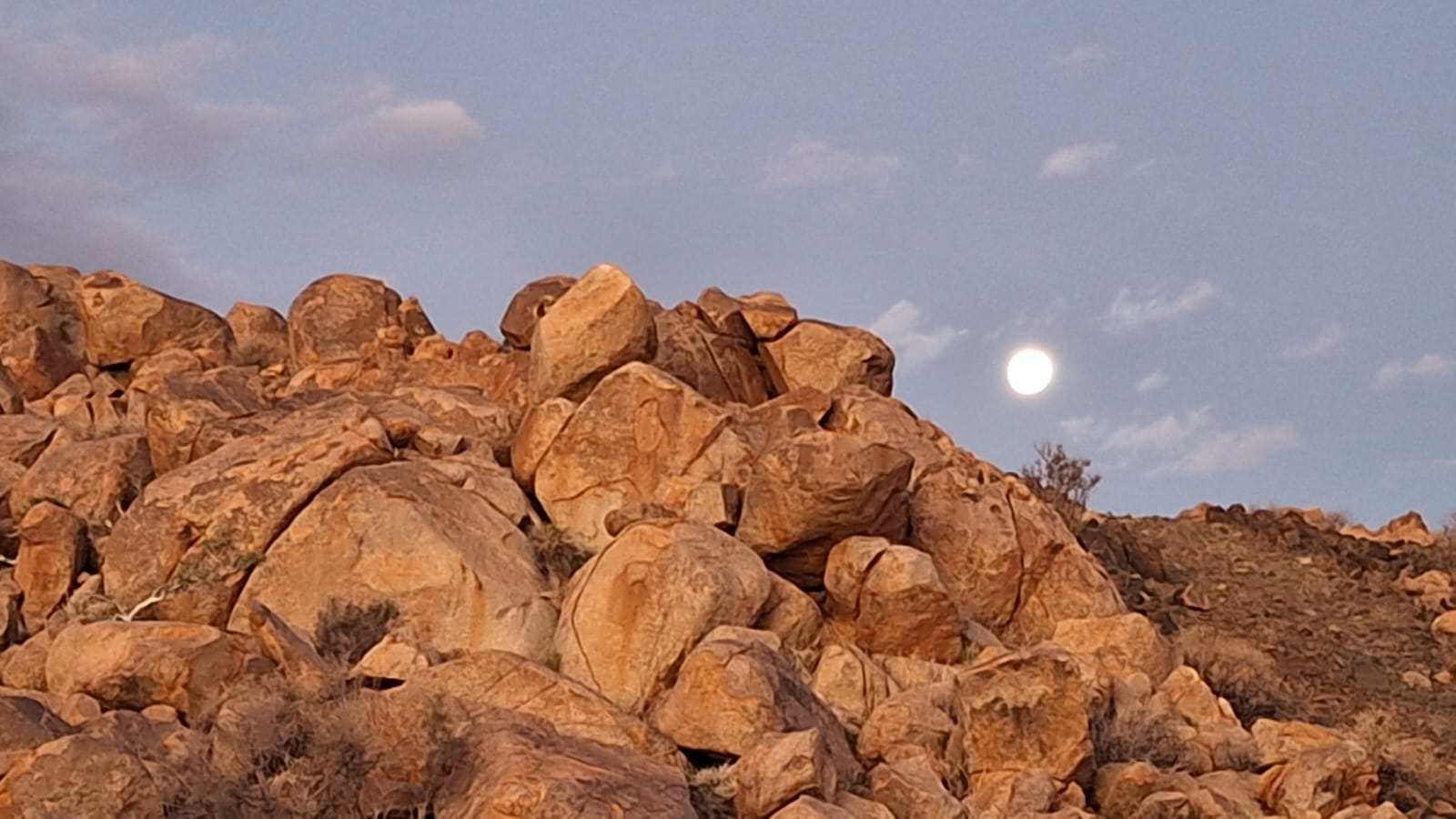
Landberg in the Tiras Mountains.


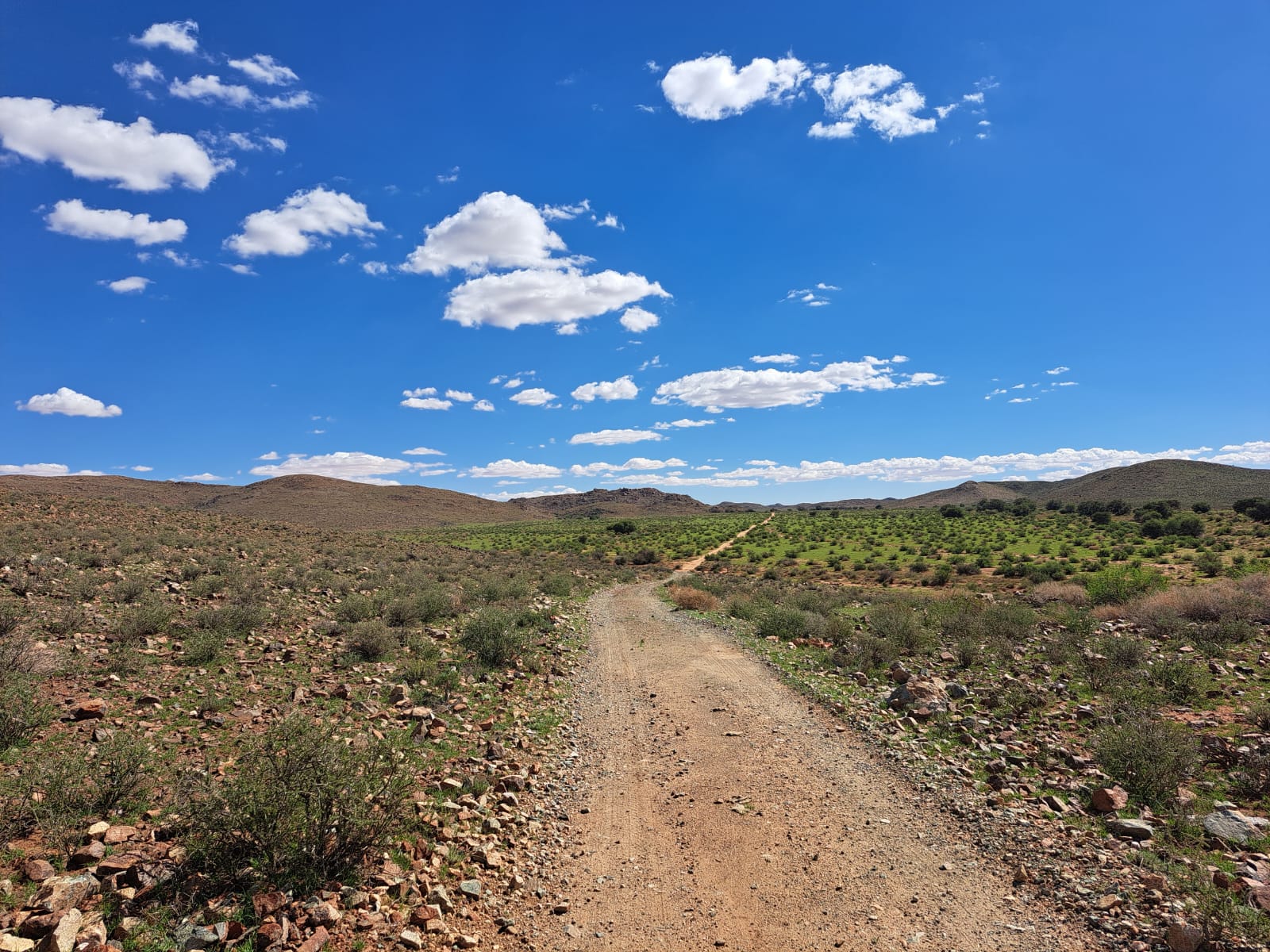
The track to the campsite is a long 25 kms.
It took us around two hours to drive it!

The drive goes through very varied terrain.


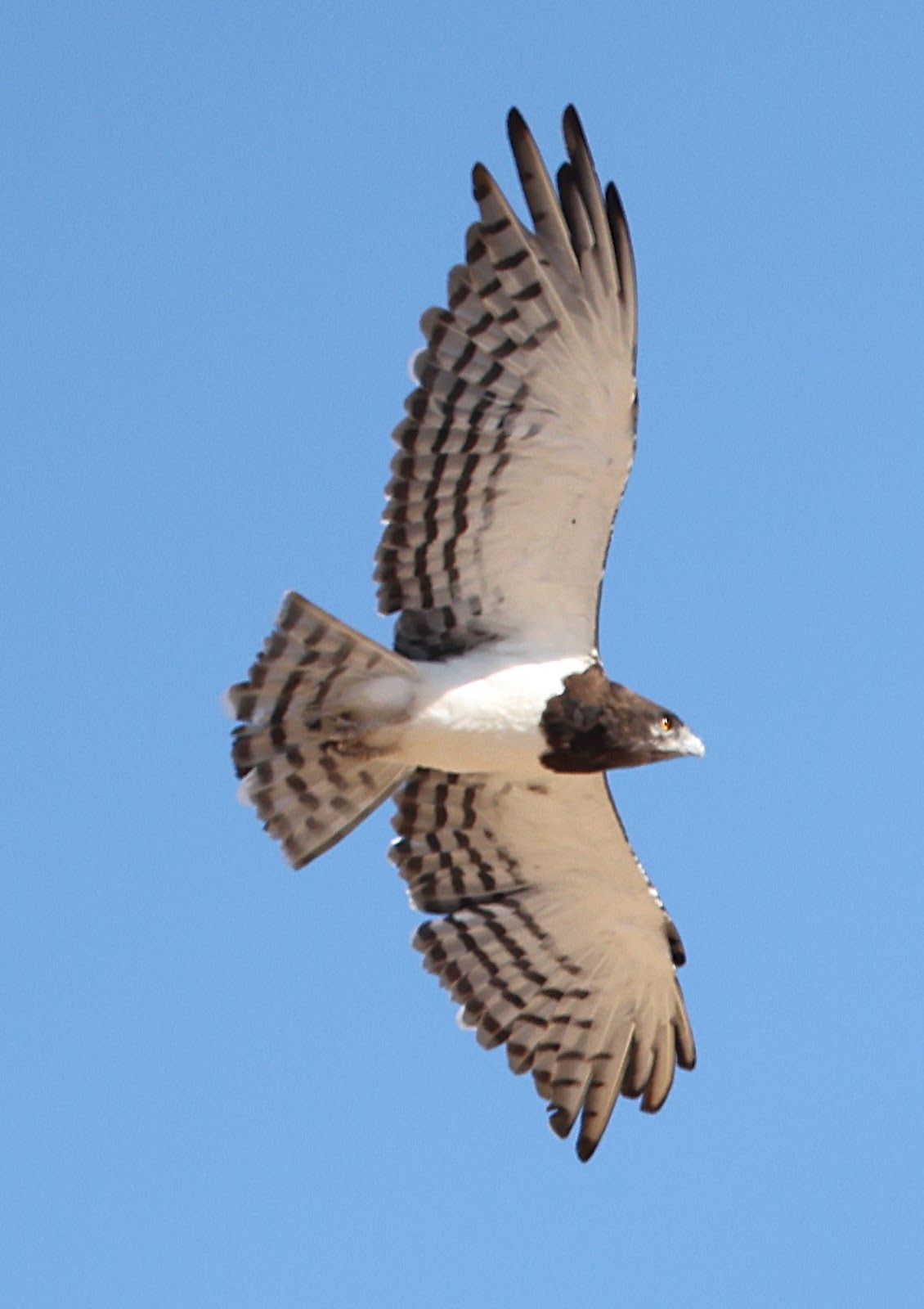
Black-chested Snake-eagle

Widespread, but found
 in low densities.

The Tiras Mountains was an area that both Delana & I had read about & we had driven by a couple of times without stopping. We heard that is was remote & very beautiful so we decided that a stay was in order on this trip. We had heard good things about the Landberg Farm & the camping site, so we booked for three nights. We arrived on the 13th March & departed on the 16th.


This farm encompasses just over 15,000 hectares & is surrounded by other similarly sized properties, so it is a true wilderness experience. There were no other people staying while we were there & we explored the area as best we could with the car & some walking. Exploring this area is not easy, as there a few tracks, some parts are more of an expedition type trip,which is beyond us. 
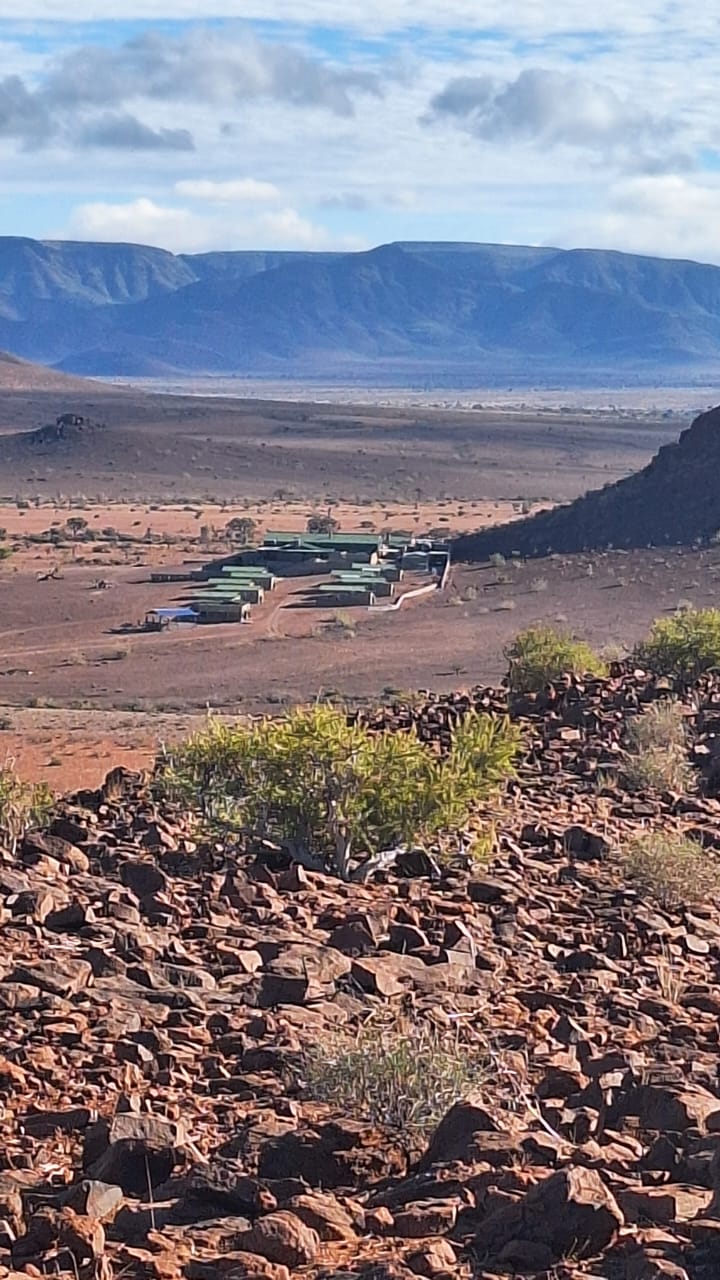
Our campsite.

The view from the camp.

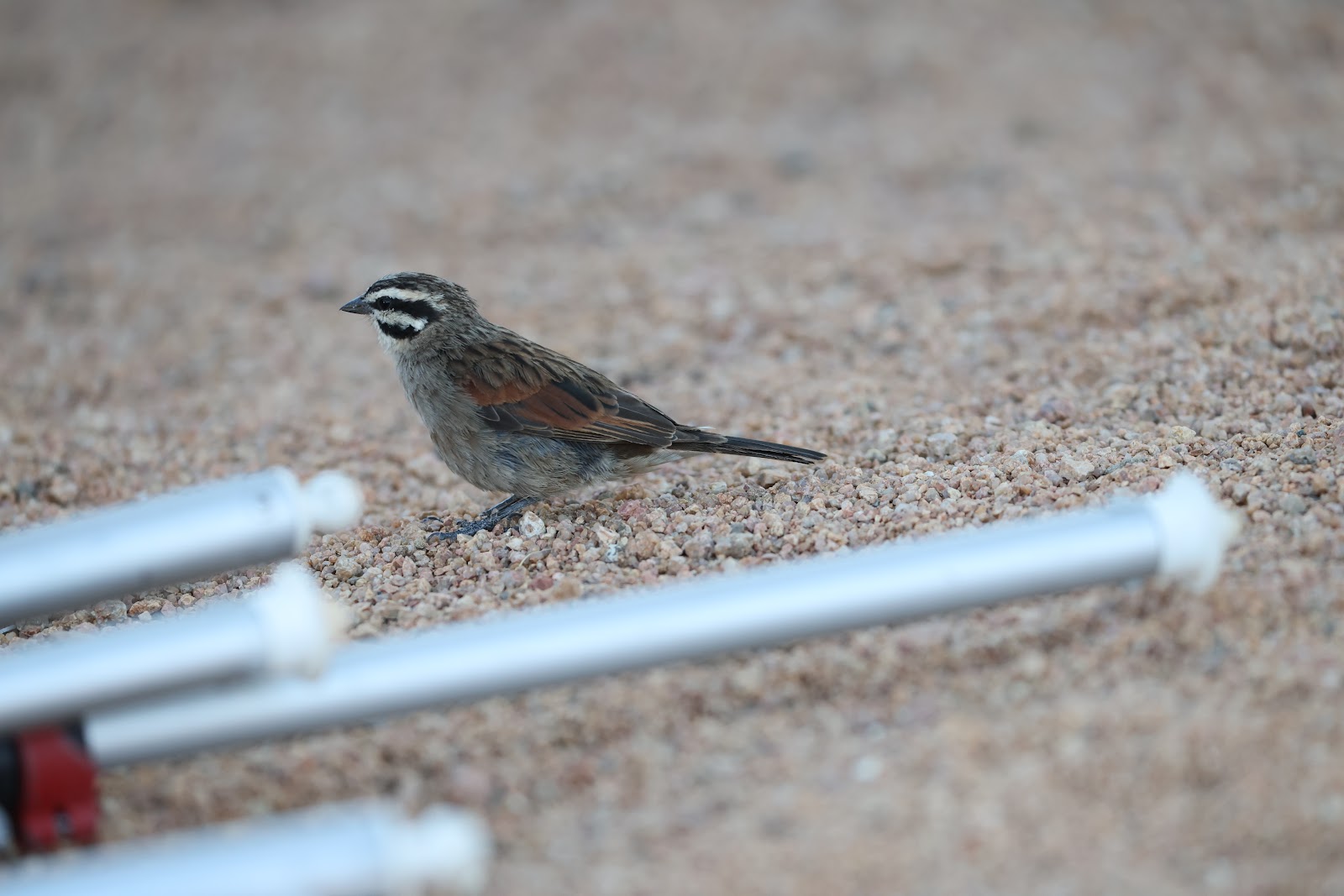
Cape Bunting

This individual was a regular visitor to our camp.

The camping site is excellent. Very well laid out,with private bathroom & cooking area. However there is no power. The Mobi Lodge caravan worked perfectly here, & we had plenty of power for our three night stay.

The Tiras Mountains are on one side
 of the property.

The only track leading up into the high areas.


Spotted Eagle Owl


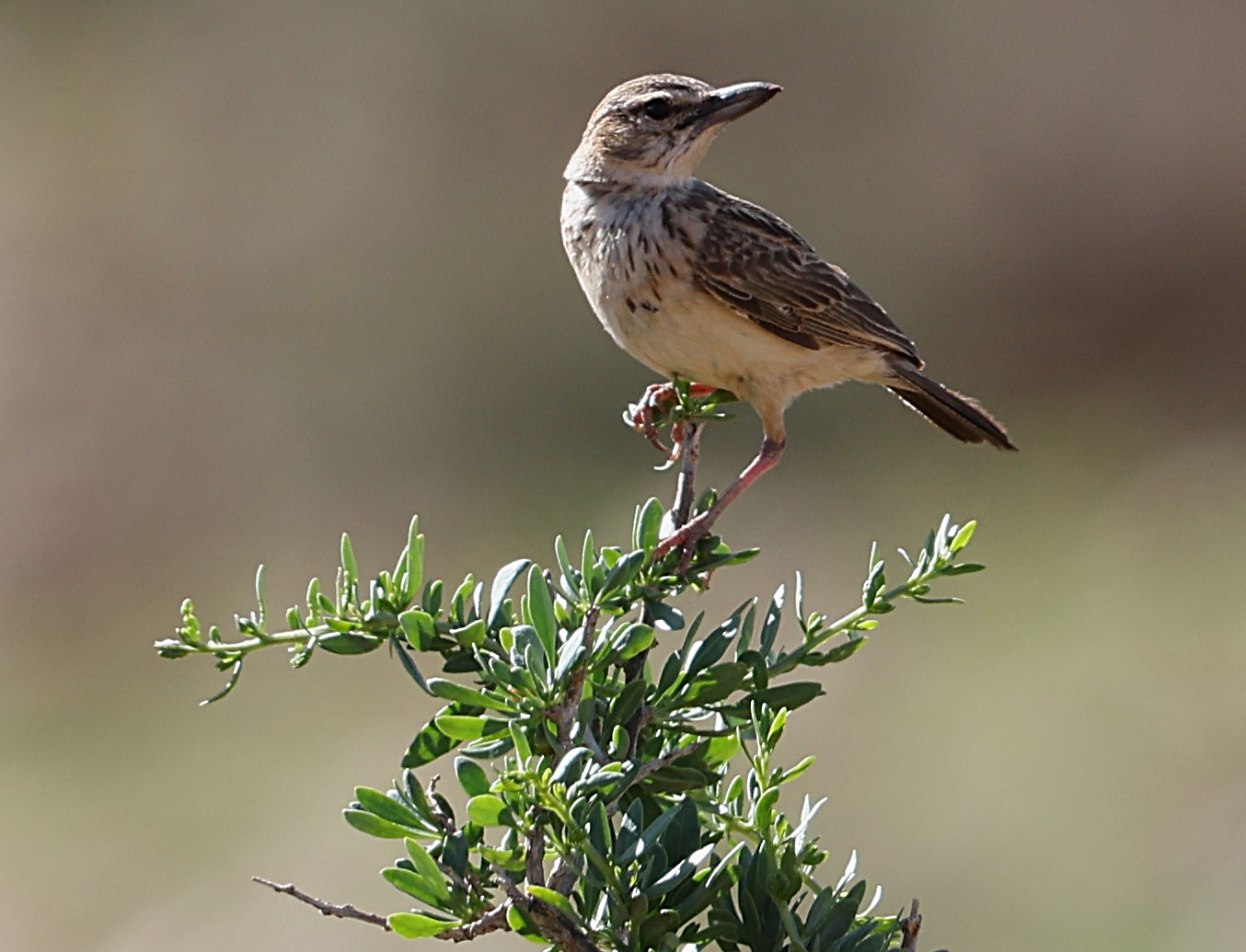
Sabota Lark of one of the large billed races.
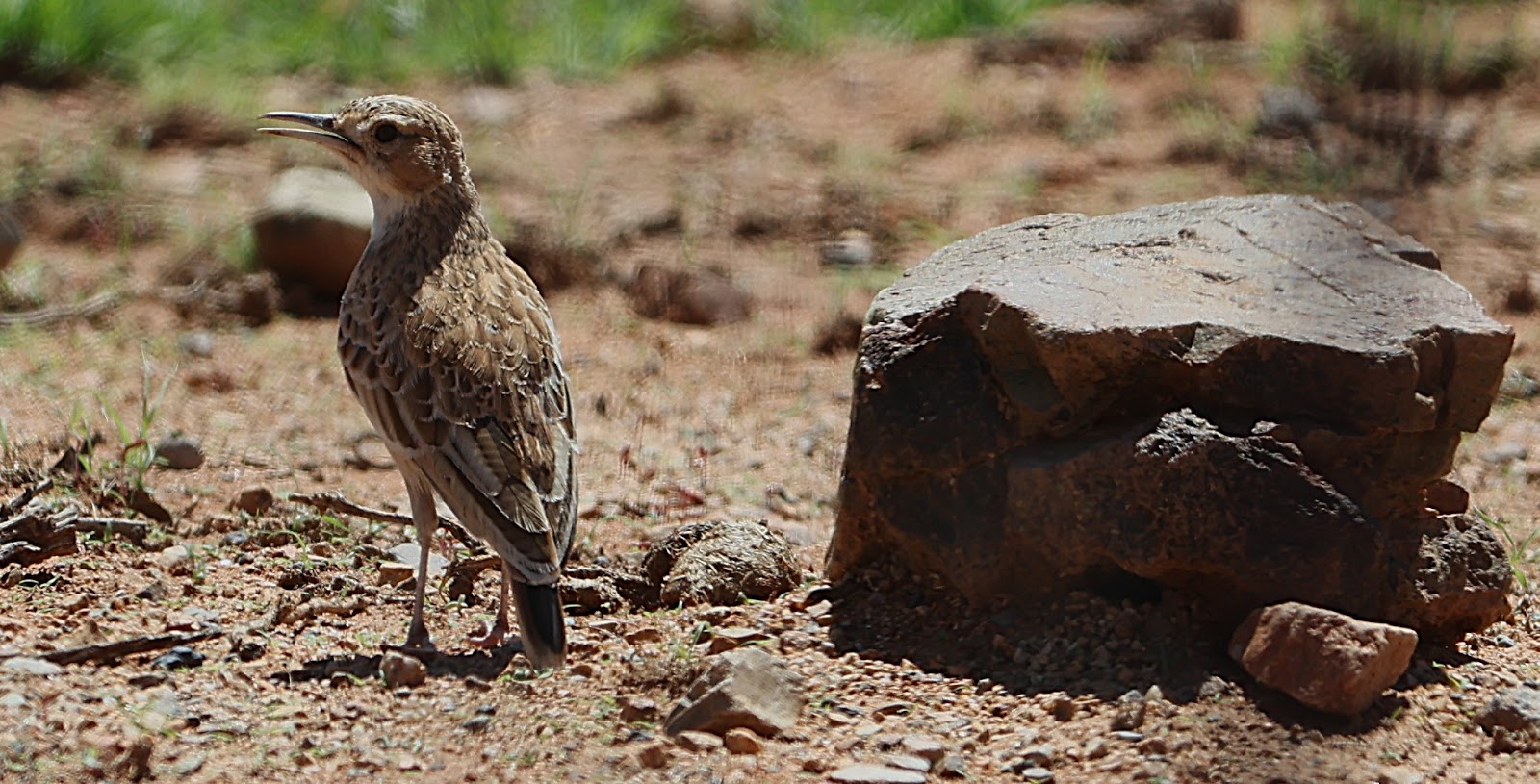
Found in the more lowland rocky areas
 with trees.

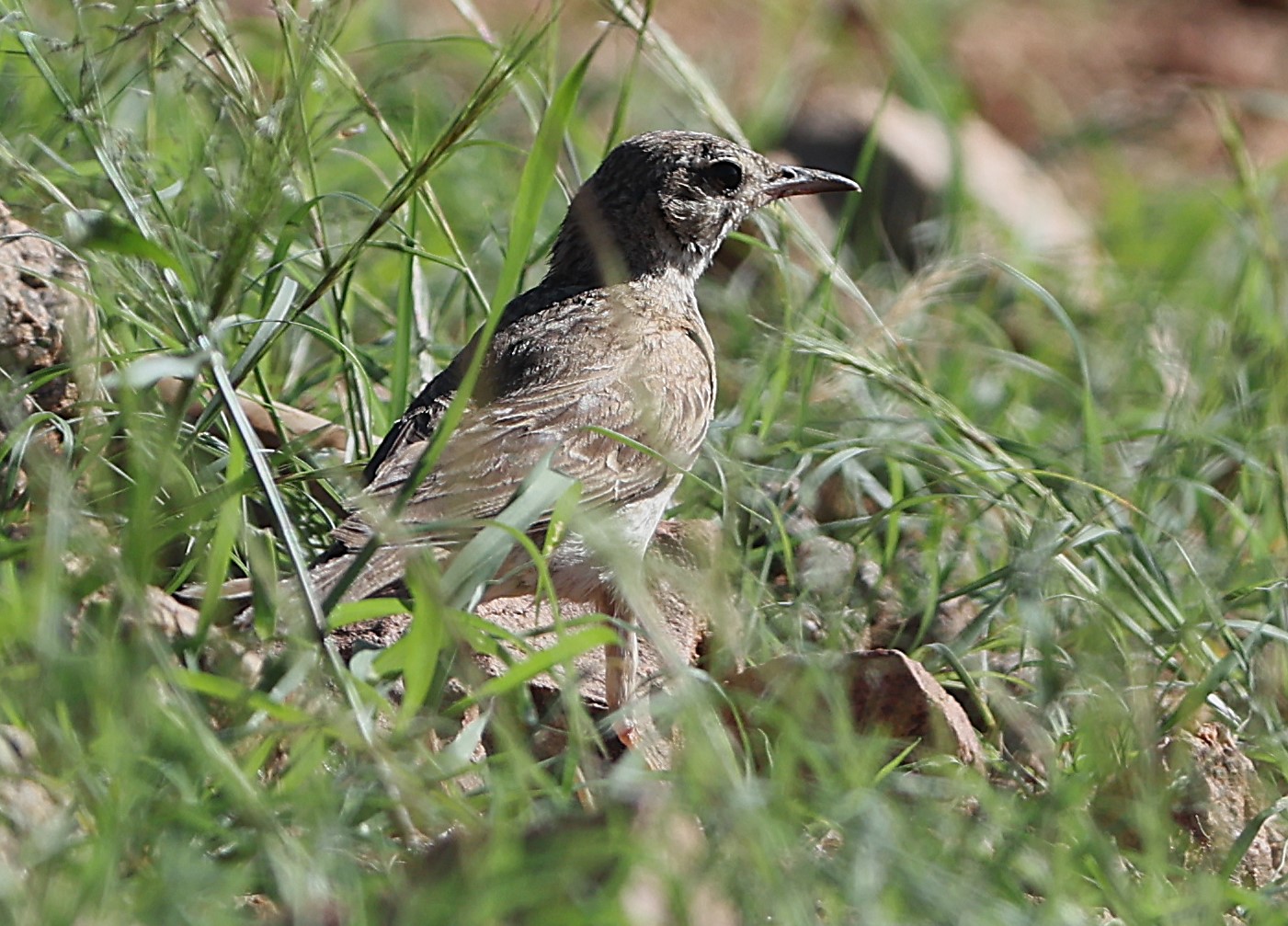
Long-billed Pipit.

Shows the relatively un-streaked back &
 long bill of this race.

This species likes the rocky upland areas &
is difficult to find.


Delana on the open plain in front of our camp.

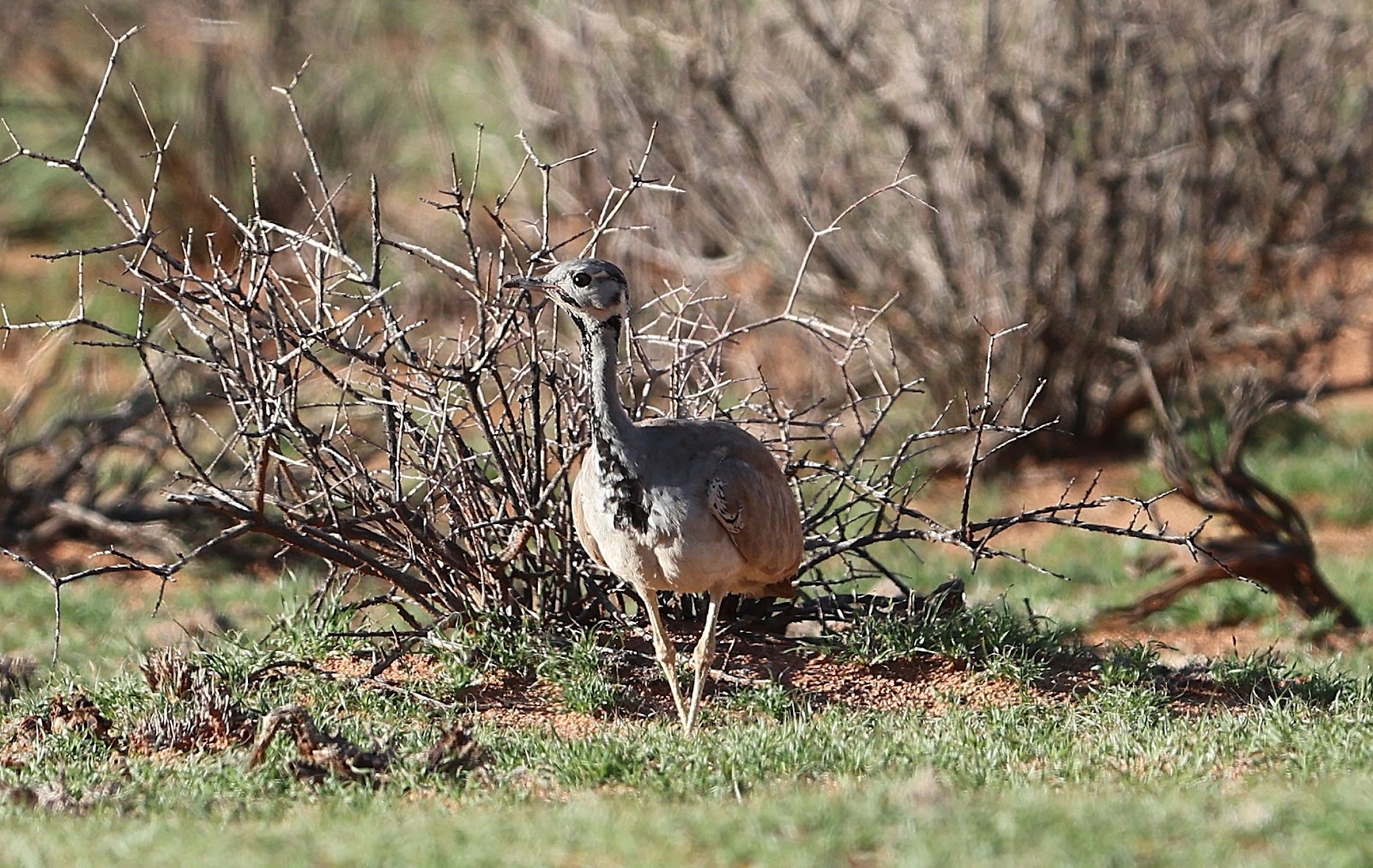
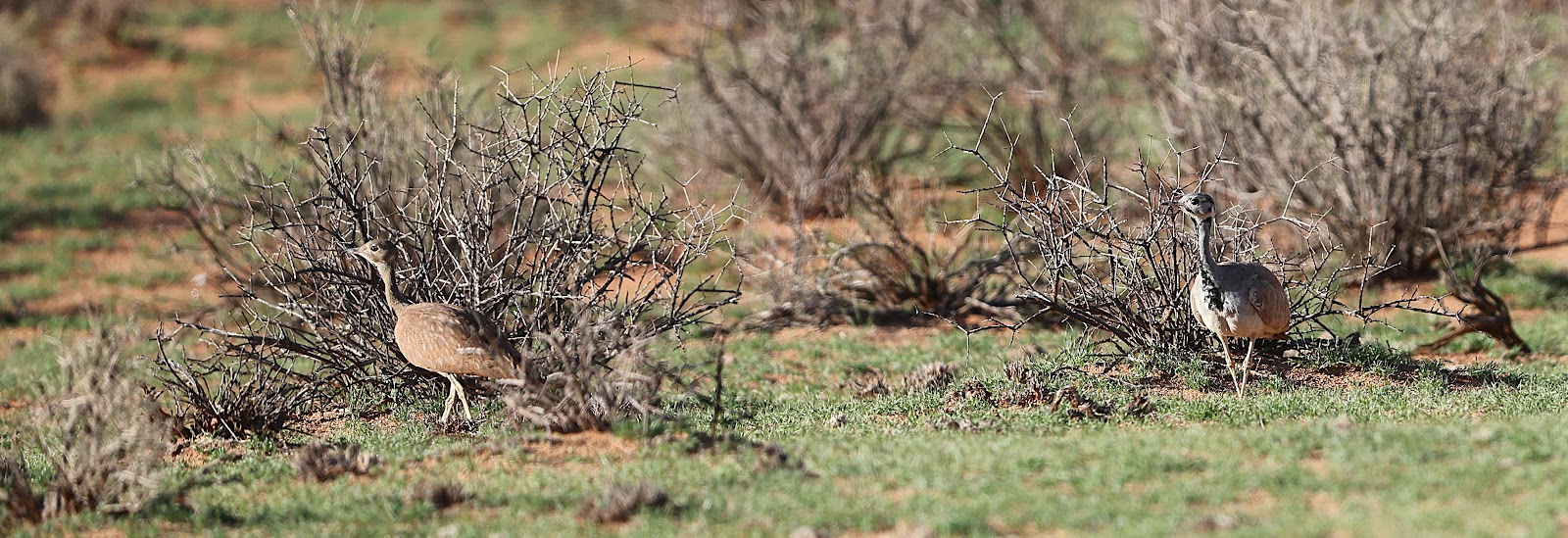
Ruppell's Bustard.

Male.


Female on the left, male on the right.

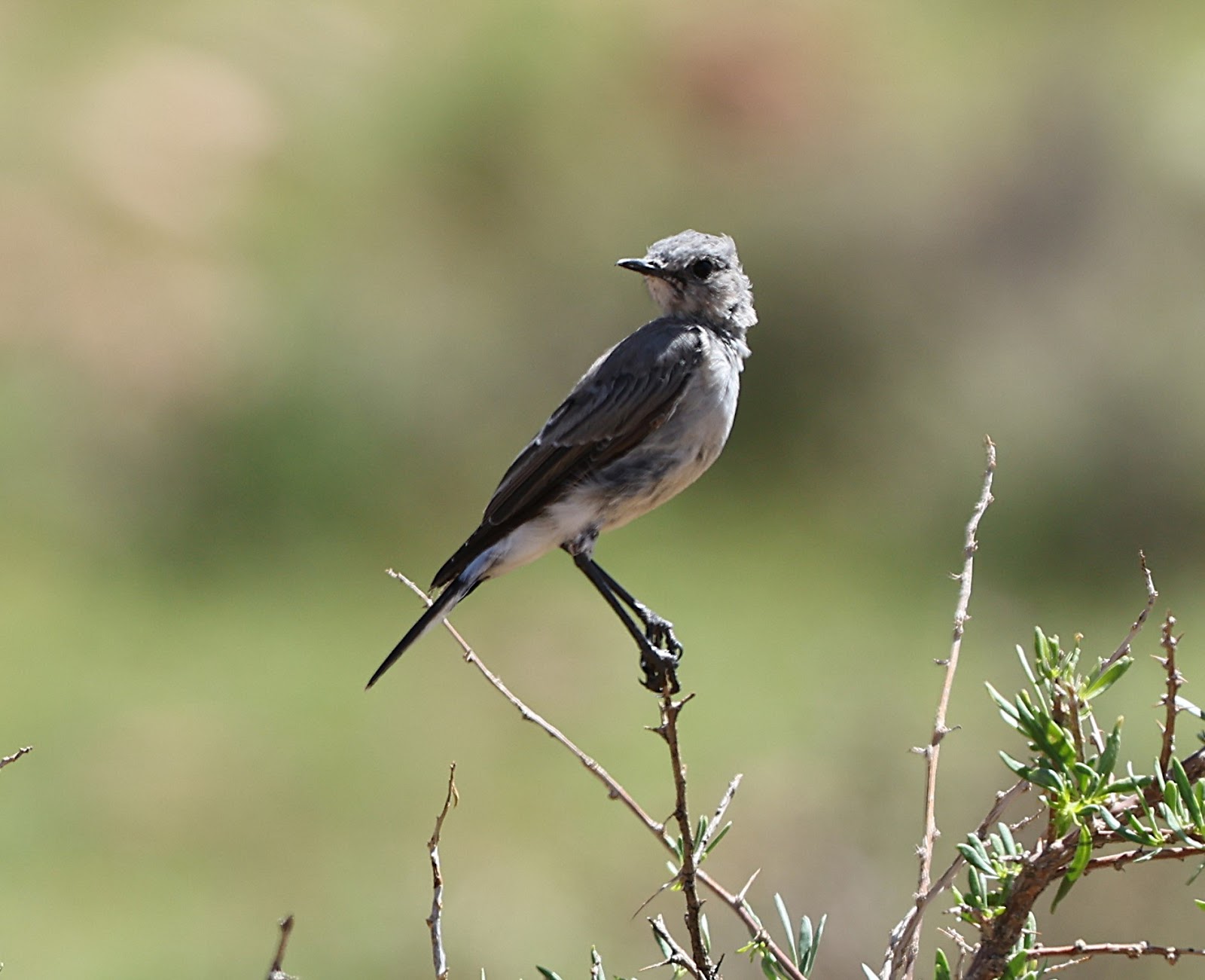
Chat Flycatcher

A widespread but low density species
 in lowland areas.


Often found in pairs.

Karoo Chat

Very flighty & difficult 
to get close to.


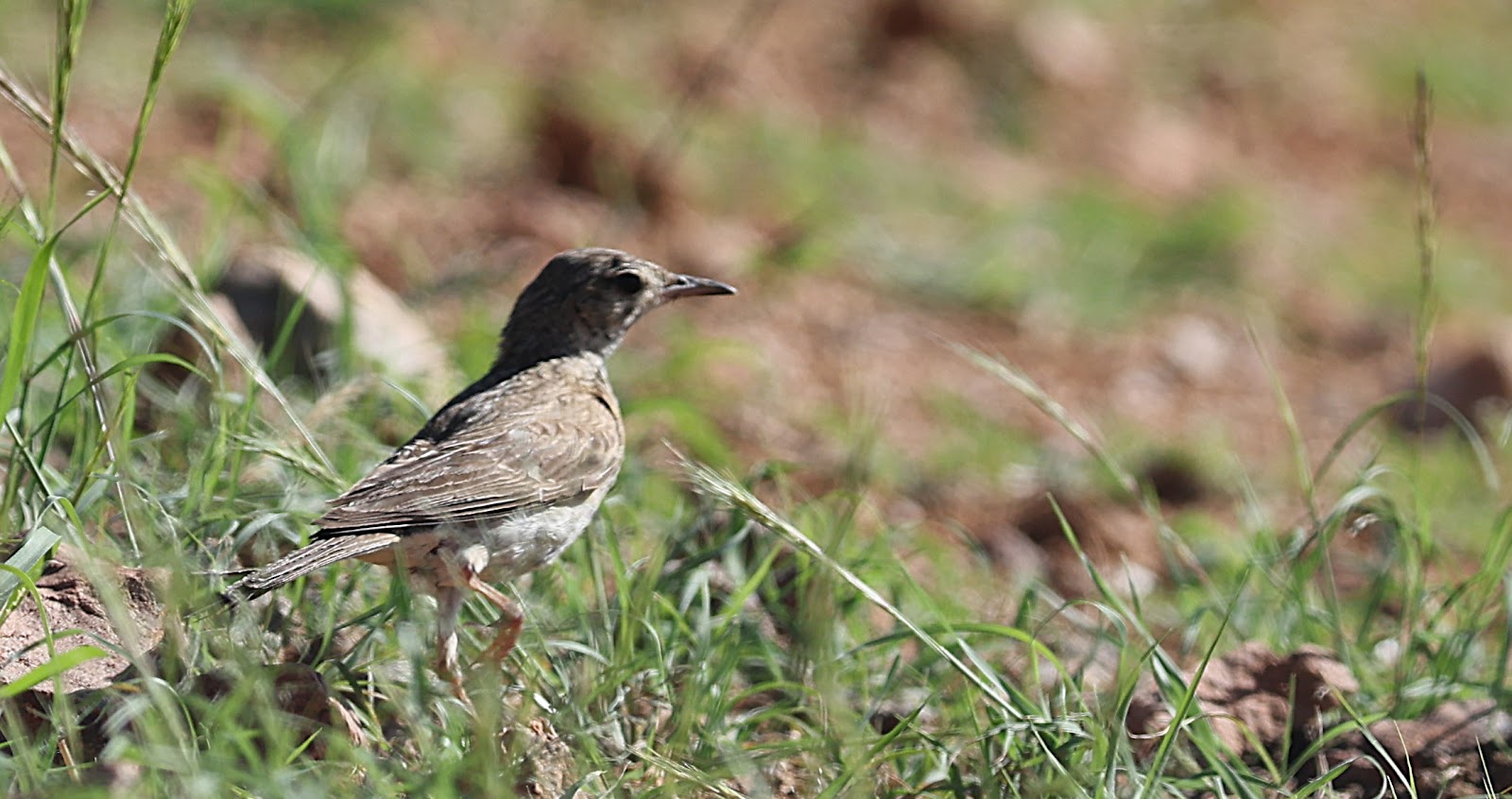
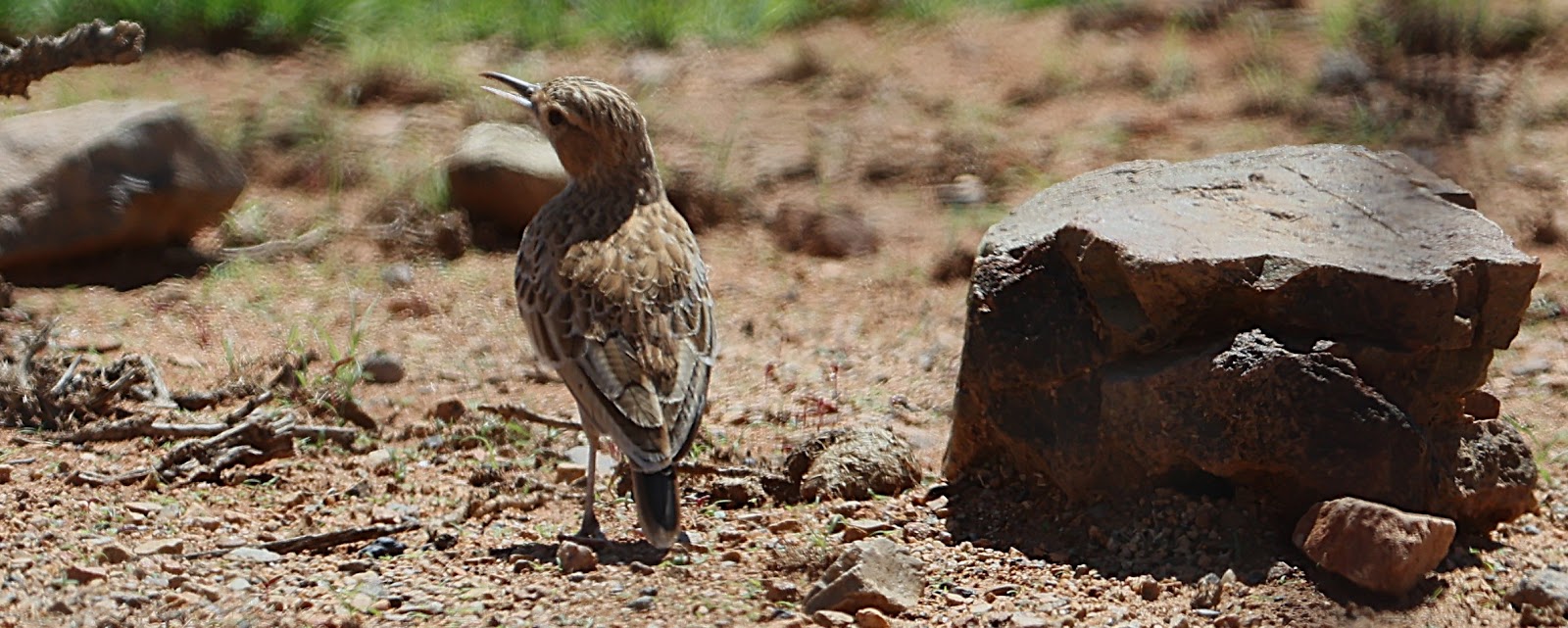
Spike-heeled Lark

Often found in lowland areas, on the edges of rocky 
areas with sparse grassland.


One day we had to go in to a small town for Delana to get internet access for work. So we went to a local hotel & this was outside! It turned out to be a pleasant place to while away a couple of hours.

The Landberg area was hard work. We struggled to find many animals & birds were few & far between as well. However, we had a great time here & it really was a great wilderness experience. We would definitely visit again.