the last day of this wonderful trip. The weather was glorious, with bright sunshine & very blue skies. What a change from earlier in the voyage!
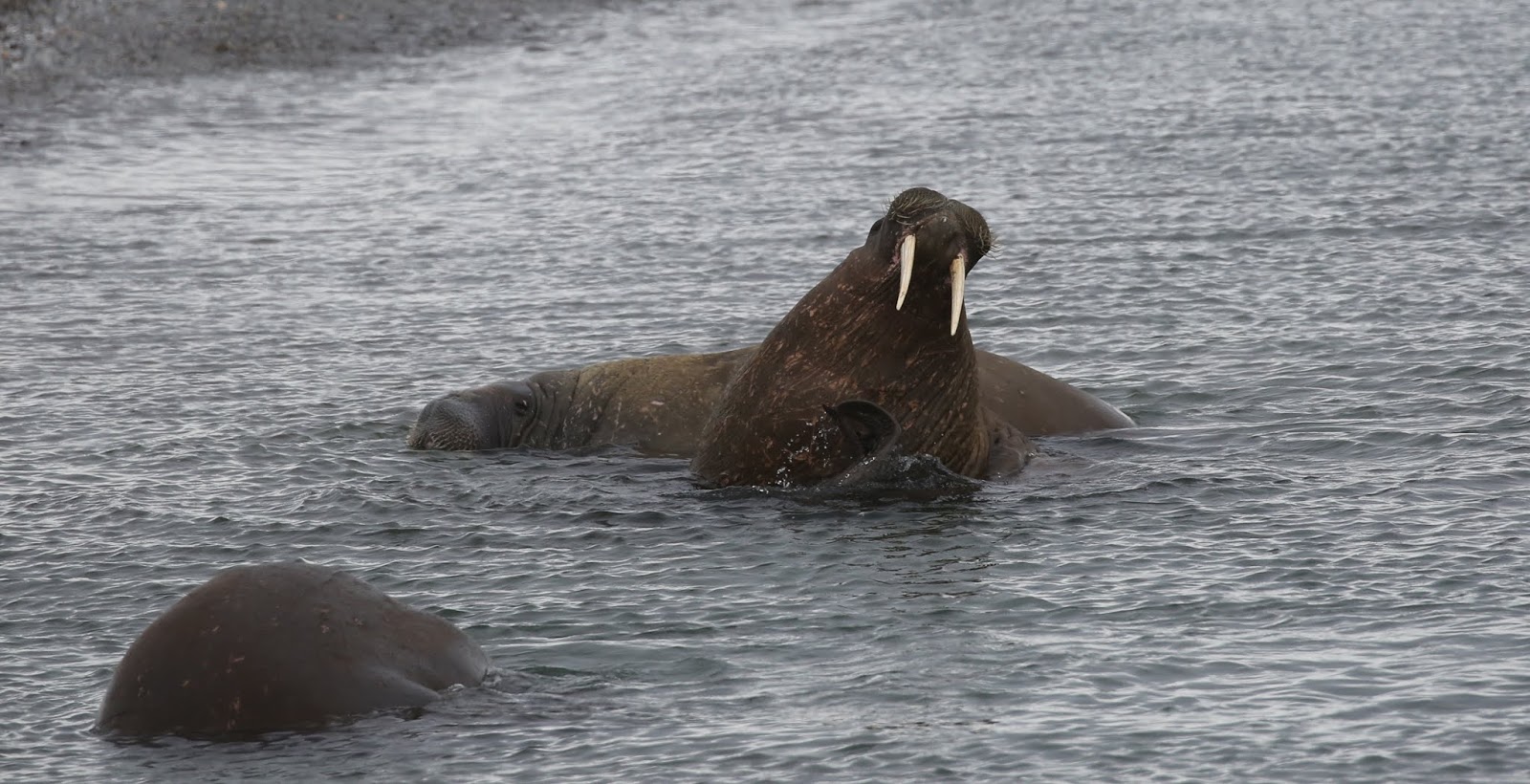
This was one of my most wanted mammals to see. So a quick dash on deck (it was 5 am in the morning) & there they were. Unfortunately they were in shallow water very close to the ice & to shore, so we couldn't get very close.
One doesn't know which way to look!
And then this was spotted!
Another Polar Bear!
Constantly sniffing for possible food.
Incredible animal in a dramatic setting.
Slowly it came a little closer to the ship.
Still around 500 m away.
Getting closer!
It smelt us & then started slowly
to angle away from the ship.
Nordenskiold Glacier
This was happening right in front of the Nordenskiold Glacier, an amazing sight in itself, but for once largely ignored!
It then made its way back to the edge of the ice
& open sea.
Little did we know what was going to happen next!
It started to look into the water.
I missed the moment it dived in!
It was definitely interested in the Belugas
Swimming with them & frequently looking
underwater as they swam by.
It didn't really have a chance, as the whales
were far too speedy.
Entertaining though!
It eventually hauled itself out on to the ice.
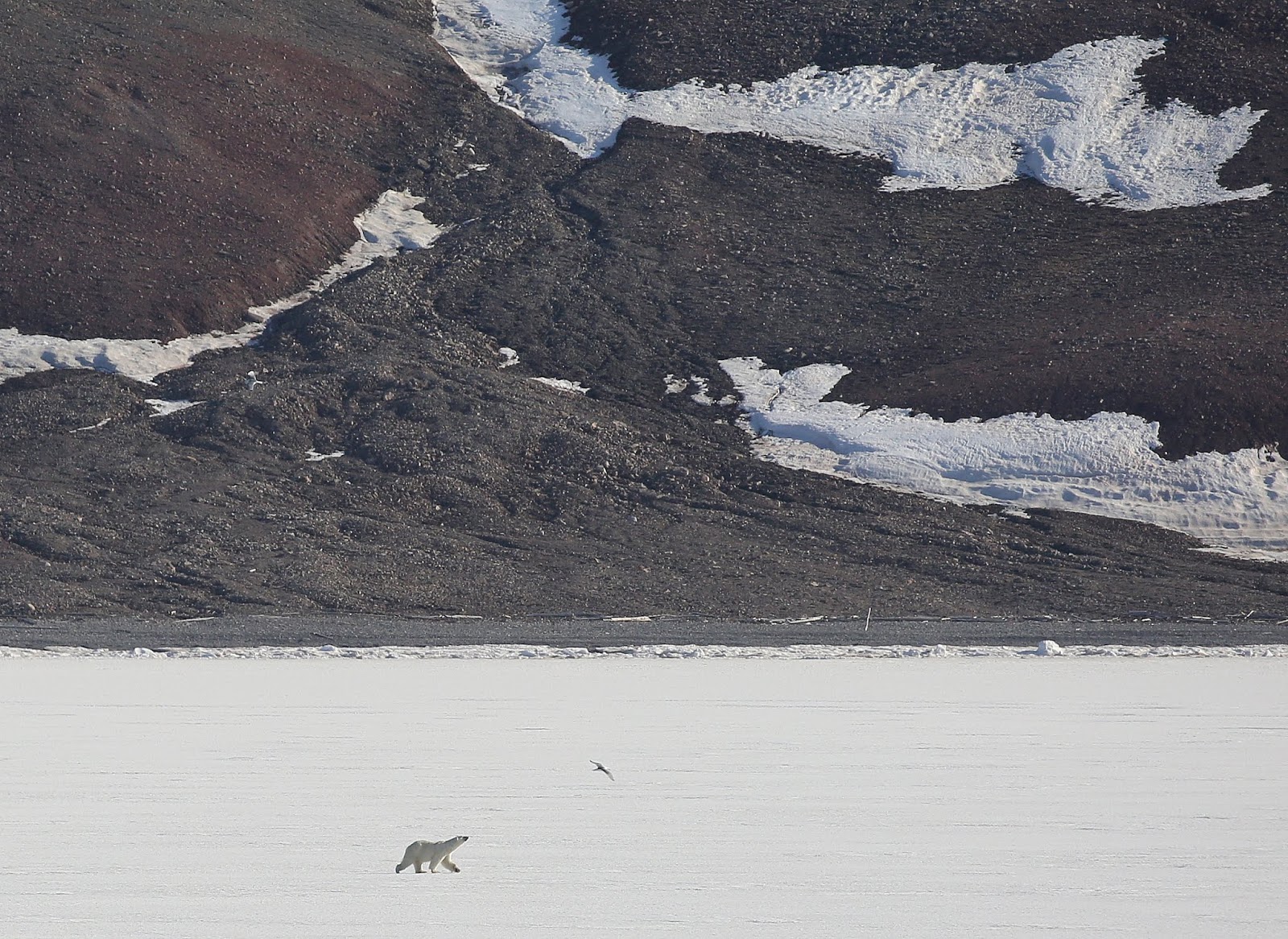
We watched this bear for around two hours before it walked further & further away & we sailed further in to Petuniabukta Bay. However, we soon spotted yet another bear.
A stunning place.
Just to give you an idea of the scale of the
landscape in relation to the bear!
It walked further & further away.
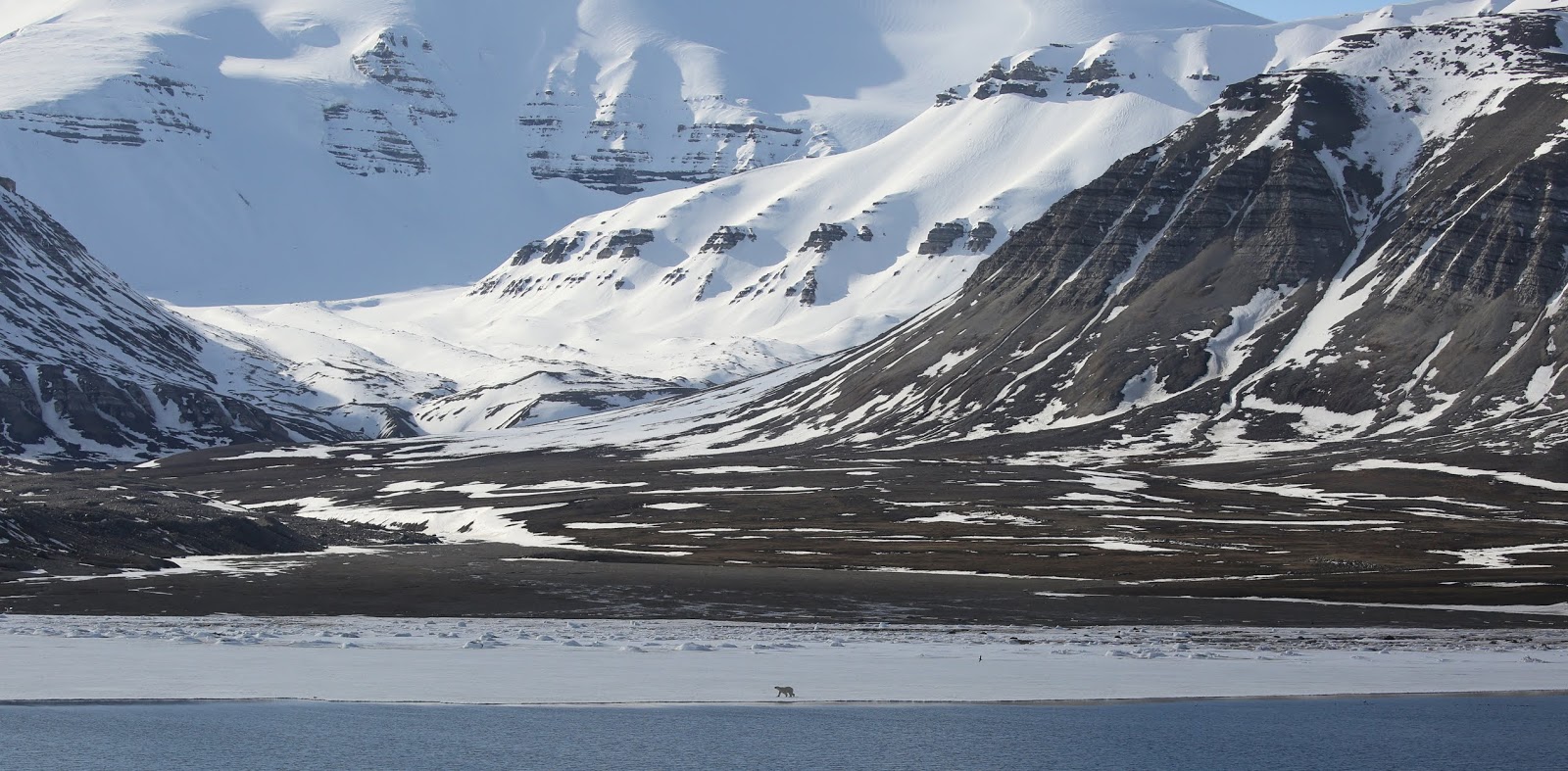
There is a bear in this photo!
Heavily cropped just to prove it!
Ivory Gull
Arctic Tern
Bearded Seal, I almost missed it
because of the Polar Bear!
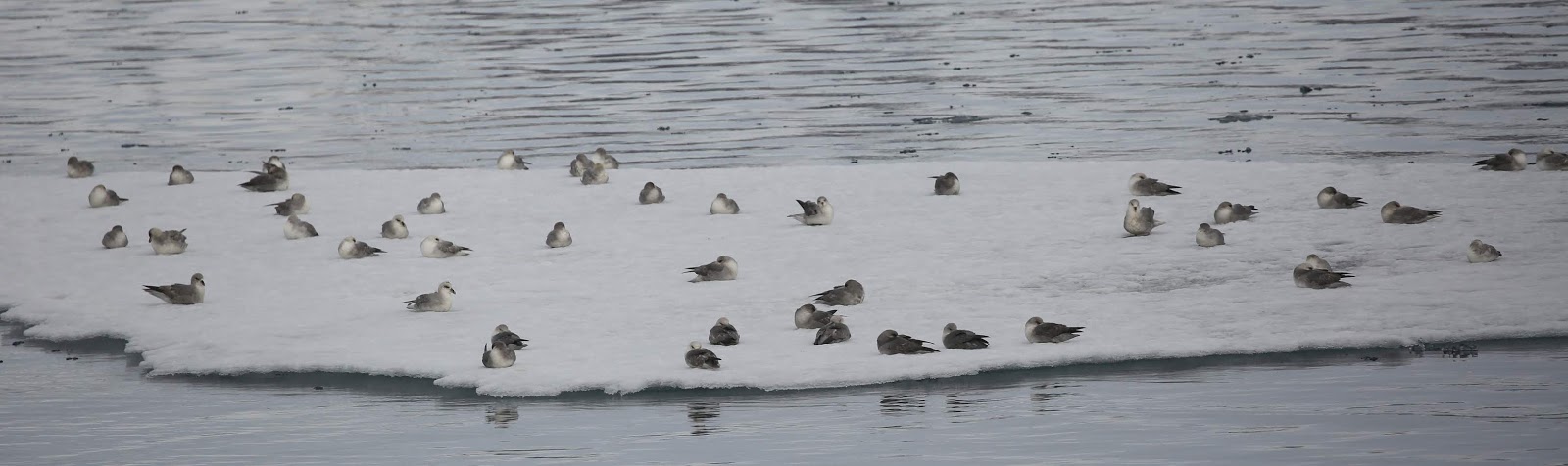
In the calm conditions all the Northern Fulmars
were just loafing on the ice.
Pyramiden
Pyramiden is a Russian town, that was established to mine coal. Today however it is a bit of a ghost town, although one can stay there overnight as there is still a hotel.
One can still see the coal piled high
on the left of the photo.
The scenery was awesome as we sailed past
the long lost town.
Lots of Brunnich's Guillemot were on
the edge of the ice.
Brunnich's with one Little Auk
Brunnich's Guillemot
Little Auk
Black Guillemot
Our ship at Skansbukta
Dramatic, if slightly unwelcoming scenery!
Still ice around here.
A relic from the past!
Barnacle Goose
Pink footed Goose
Purple Sandpiper
Around 170 were newly arrived in the bay.
We enjoyed lunch while dashing occasionally outside to view the incredibly scenery passing us by. But once we got the zodiacs out for our landing it clouded over & went suddenly incredibly cold! We didn't see Skansbukta in the best possible light, it was freezing & the wind was very keen.
Our landing site.
Delana & I spotted this as we landed,
but decided to keep it quiet!
There were high cliffs rising up close to the beach.
Svalbad Reindeer
Black Guillemot
Delana
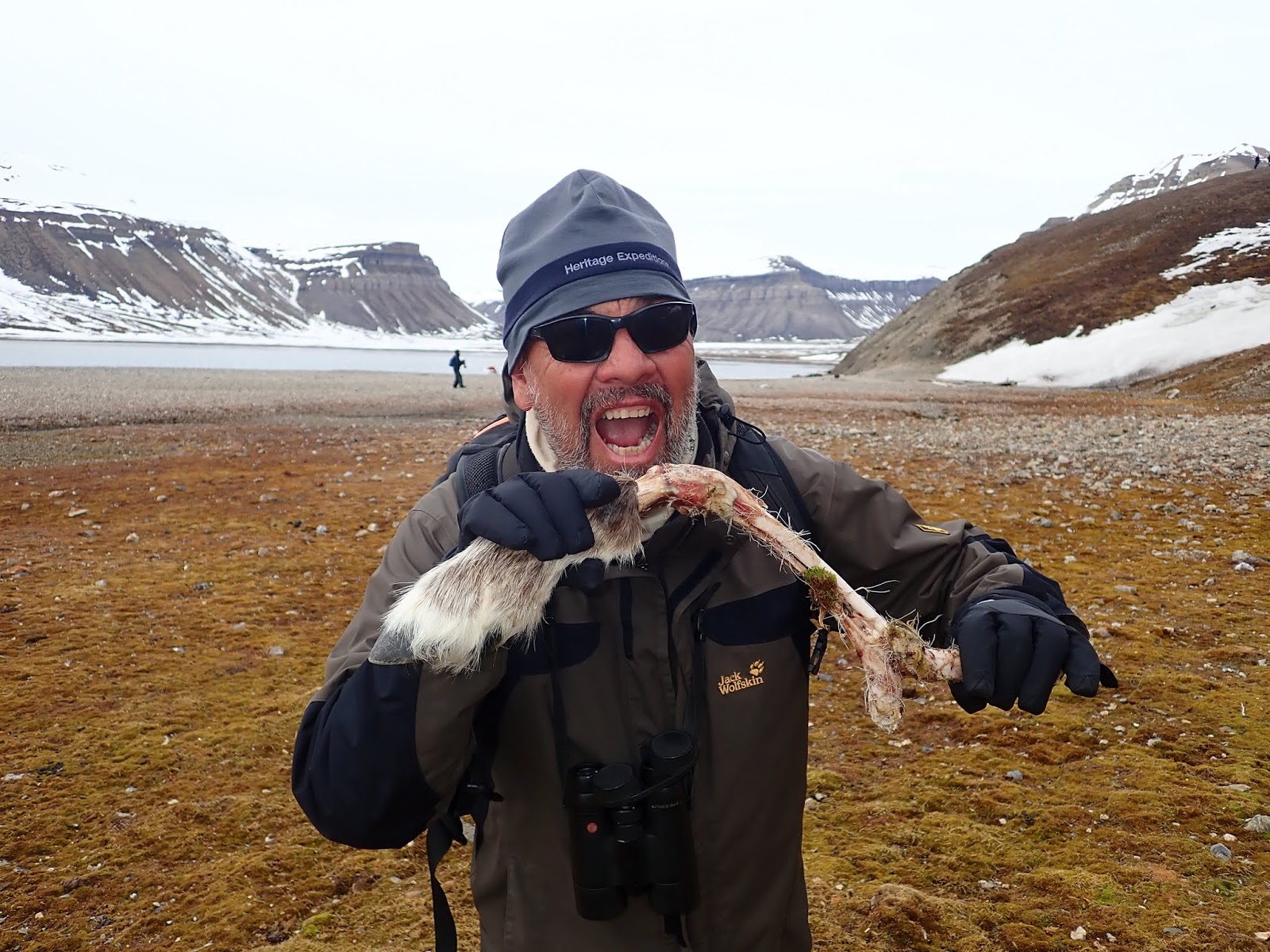
Found a bit of reindeer!
I presume it died of natural causes?
Just had to have a snack!
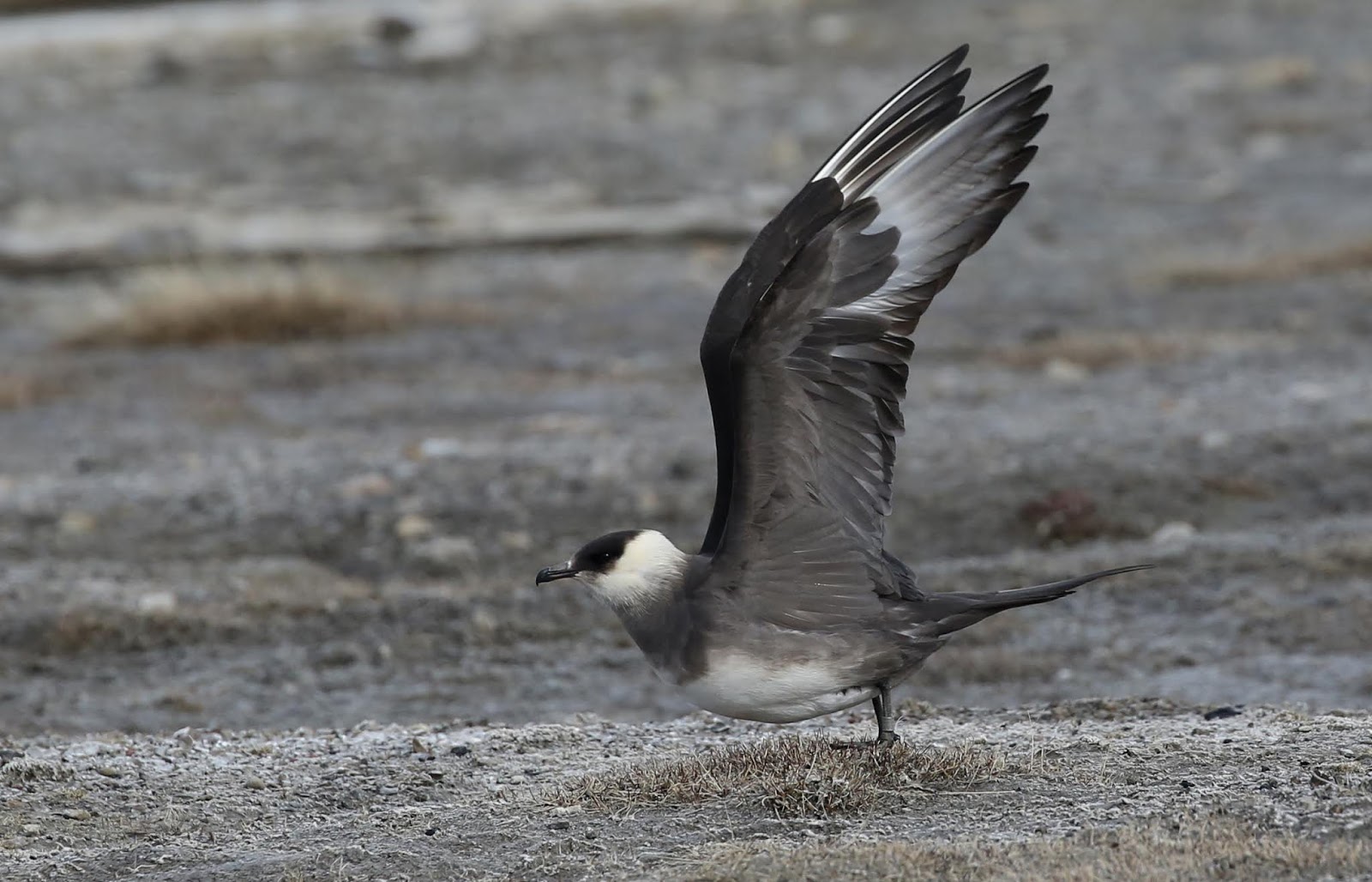
Arctic Skua
One of my all time favourite birds.
Arctic Tern
Snow Bunting
A superb male in summer plumage
To be honest, this was the only disappointing land of the entire trip. Birds & animals were scarce & the weather had turned against us. There were Northern Fulmars nesting high on the cliffs & several Svalbad Reindeer. There were a few Black Guillemots feeding close inshore, but that was about it!
A mixed flock of Eiders.
There were six King Eiders in the larger flock.
What a place!
Glaucous Gull
The evening was spent sailing through the northern part of Isfjorden & once again the weather was brilliant (once we were back on board)!
Best birds:
Northern Fulmar 2,000, Pink footed Goose 3, Barnacle Goose 2, Common Eider 65, King Eider 6, Purple Sandpiper 170, Arctic Skua 1, Great Skua 2, Glaucous Gull 55, Kittiwake 400, Ivory Gull 1,
Arctic Tern 45, Brunnich's Guillemot 500, Black Guillemot 100, Little Auk 50, Puffin 5, Snow Bunting 1.
Mammals:
Beluga 50, Bearded Seal 2, Ringed Seal 1, Polar Bear 2, Svalbad Reindeer 25.
This has been an amazing trip! The Plancius is a superb ship for this kind of expedition travel, very comfortable, with an amazing observation lounge. Svalbad is not rich in species, but it is an incredible destination for scenery & the mammals. Bird life is limited, but there are some incredible species & amazing sights. On this trip we were lucky in meeting some like-minded souls, which just added to our enjoyment.