The 14th November was a
travel day from Fiji to Apia in Samoa. We left the Rainforest Eco-lodge at 7am, everything went according to plan
& two flights later we landed in Samoa on a beautiful sunny afternoon! What
a change from the heavy rain in Fiji (or so we thought)!
The airport was bright & very modern, custom
& immigration formalities a breeze, & we stepped outside into the
sunshine. Our taxi was waiting & we slowly drove along the coast, passing
brightly colored & very neat looking houses along the way.
This lodge is in a fantastic location!
Soon we started
to climb up into the hills & we arrived at Dave Parker’s Eco-Lodge,
which is often referred to as Cloud 9.
The room from our room down to the coast.
The view from our room, looking inland.
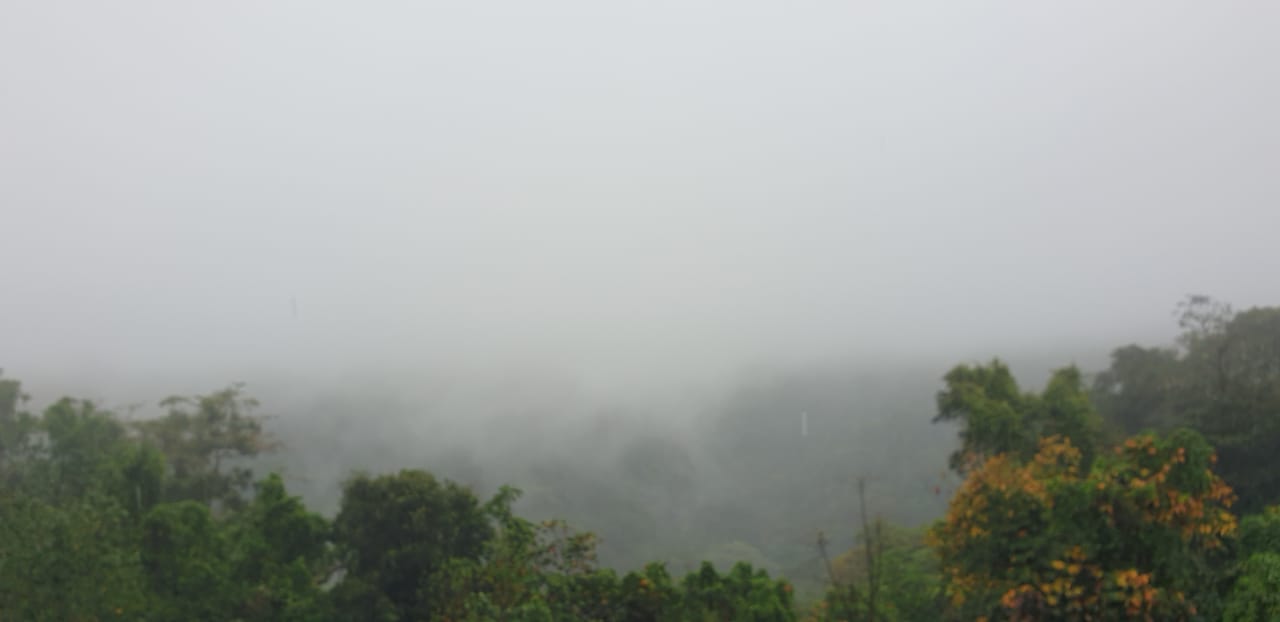
However, often the view looked like this!
Our room.
Inside, quite spacious but kind of spartan.
This lodge has been around for a long time
& it shows on the lodge buildings. However, it is set in an unbelievable
scenic location looking down across natural forest to the coast. It is a favorite
stop for birders & that is why we were here.
Crimson-crowned Fruit Dove
Eastern Wattled Honeyeater
After settling in, we birded casually from our
balcony & recorded five new world birds:
Crimson-crowned Fruit-Dove; Blue-crowned Lorikeet; Eastern
Wattled Honeyeater; Samoan Starling & Royal Parrotfinch.
Cheers!
It was a lovely evening so
tonight we will just relax! After a pleasant evening meal, we retired to bed
early, eager to start birding at dawn.
That is going to hurt our birding!
White-tailed Tropicbird
Seen from our balcony!
Wonderful to see such majestic birds
flying below us!
There was torrential rain all night, sometimes
so heavy it woke us up! And as dawn broke on 15th all we
could see was mist & rain! And rain it did throughout the morning for hours
on end. Through the gloom, both White-tailed Tropicbirds & White
(Fairy) Terns could be seen circling far below among the dense forest.
Samoan Myzomela
A Samoan
Myzomela flew by flashing it’s outrageous crimson & black plumage.
A nice little stream runs through his property.
In the early afternoon the rain finally
relented & we went for a walk down the hill to explore Dave Parker’s land,
which is a mixture of farmland & forest patches.
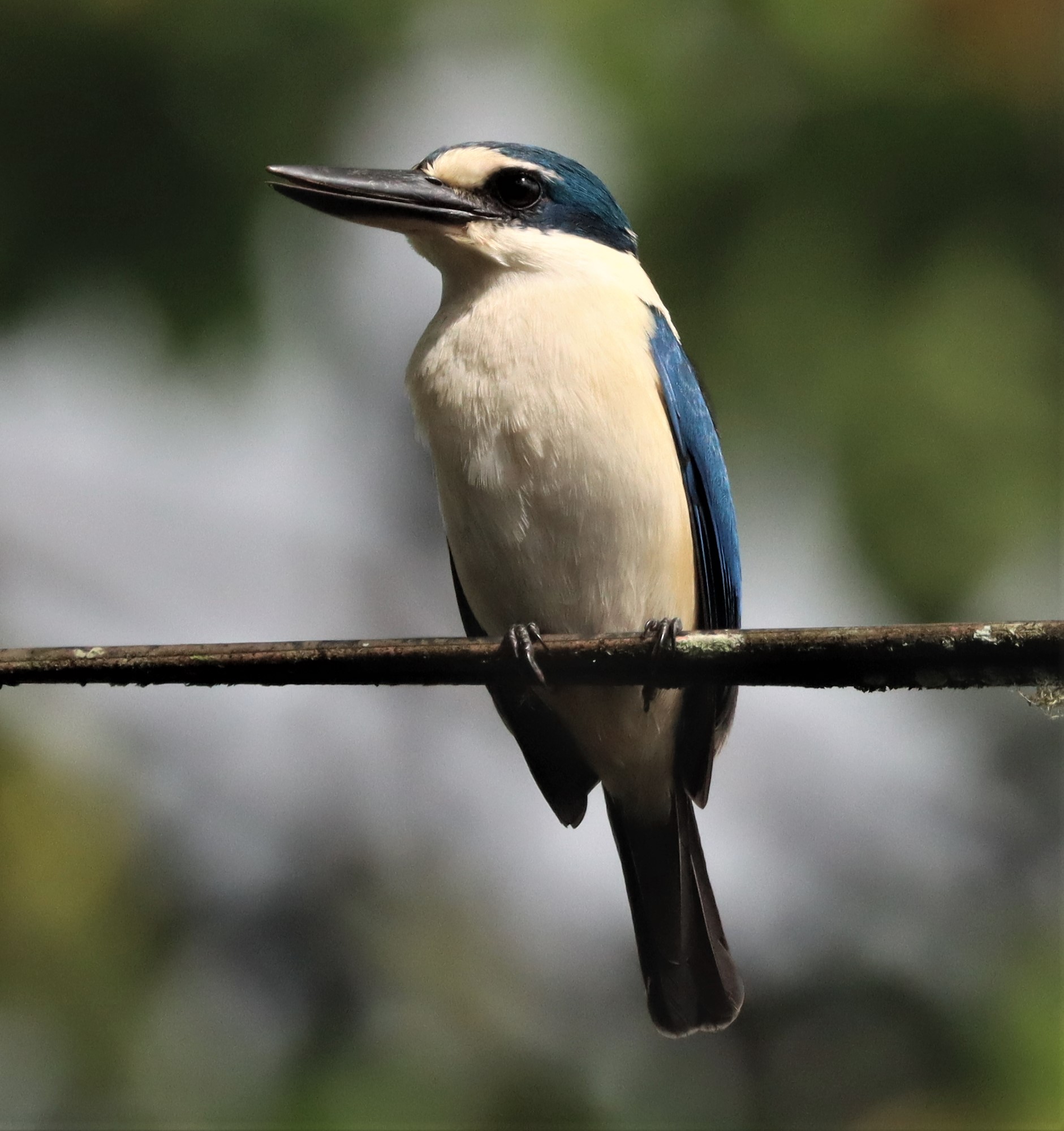
Flat-billed Kingfisher
Mao
Eastern (Polynesian) Wattled Honeyeater
Buff-banded Rail
Male Samoan Myzomela; stunning birds!
A Flat-billed
Kingfisher showed well on the wires. A Mao was heard calling & briefly
seen. Several Eastern Wattled Honeyeaters were in the garden.
Buff-banded Rails were scratching around. A few Samoan Myzomelas showed
brilliantly, including a stunning male. Samoan Starlings were everywhere
& a Royal (Red-headed) Parrotfinch flew over.
White-tailed Tropicbird nesting in a giant tree fern.
All the while White-tailed Tropicbirds
& both White Terns & Brown Noddies flew overhead & are
breeding in trees in the forest patches. The evening was spent sat on the
balcony overlooking the forest, but little new was seen & the rain fell
once again with a vengeance!
Robert Louis Stevenson's house.
Quite a grand affair!
Pacific Golden Plover
Quite a common migrant in Samoa,
found in many open spaces even in the town.
It rained throughout the night but as dawn
broke the rain stopped! We got our gear together & visited the Robert
Louis Stevenson Museum & adjacent nature reserve on 16th
November.
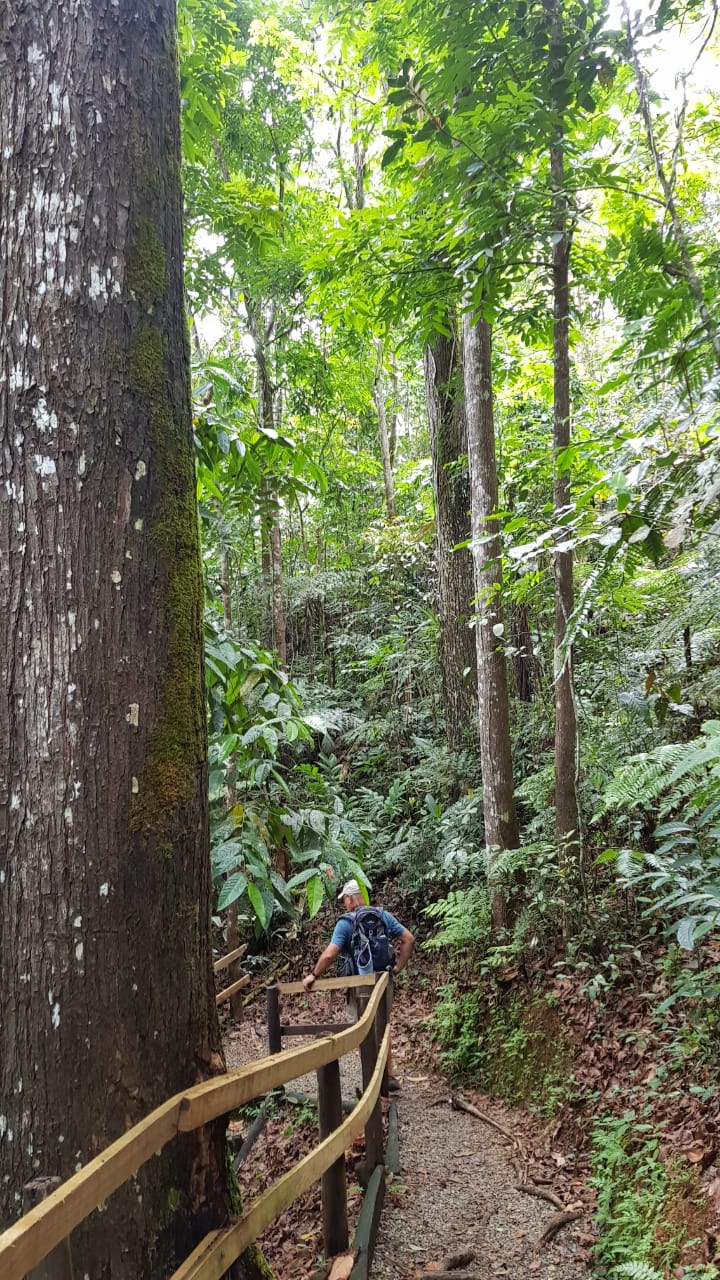
The adjacent nature reserve is well set out &
the authorities are conducting tree planting.
Samoan Whistler
A common species here,
but surprisingly scarce around the lodge.
The place was a delight & the forest was excellent. However,
the birding was hard going. Samoan Whistler proved to be the commonest
species in the forest & we had multiple encounters.
Crimson-crowned Fruit Dove
Samoan Starling
Crimson-crowned Fruit
Doves were around & we saw both Samoan &Polynesian Starlings
high in
the canopy.
We managed to return before the rain started
& enjoyed a nice lunch in Apia. The rest of the day was a wash out, as it
never stopped raining!
It rained again during the night but dawn on 17th
November was reasonably sunny & dry! I did some birding from the
balcony with coffee in hand hearing Samoan Fantail singing below on the edge of
the forest. Didn’t manage to see it though! A walk around the lodge garden
produced yet another Samoan Fantail singing, but still I couldn’t find it!
I then birded below the lodge slowly going down
the steep hill & looking carefully at all the forest patches. Delana stayed
home as she had work to do. I still had three Samoan endemics to find: Triller;
Flycatcher & of course the Fantail! I spent a long time playing the tape,
but nothing responded. Then I heard a Triller calling & right at the top of
the tree was a washed out brown Samoan Triller complete with pale bill! Had decent views of it, but didn’t manage to obtain a photo. In my
opinion this was the most difficult of the trio to see.
Blue-crowned Lorikeet:
Normally seen flying fast over the forest canopy.
Ebird told me the Samoan
Flycatcher was commoner along forest edge below 200m, so down I went. Found a
group of five Blue-crowned Lorikeets feeding in a tree. This is a
difficult species to get good views of & even though my photos were not the
best, I was pleased to get any photos at all!
Flat-billed Kingfisher
Once again had great views of Flat-billed
Kingfisher & Samoan Myzomela. Two Polynesian Starlings gave
fleeting views in the canopy before disappearing. It was a hot & sweaty
walk, but was elated to see the Samoan Triller!
Male Many-coloured Fruit Dove
Birded from the balcony & around the lodge garden during the afternoon. Very soft birding but it had its rewards! Best was a superb male Many-colored Fruit Dove perched up in a fairly close tree, opposite our balcony. This really is an amazing looking creature! We also had our best views yet of the elusive Polynesian Starling but no camera with us!
Delana found a cat!
Then it was drinks on the balcony but nothing further of note.
Up early & out on the balcony on 18th November. Plenty of activity, including the Samoan Fantail calling! But never got a look at it! Then a run into Apia & a short taxi ride of Palolo Deep Marine Reserve where Delana went snorkeling & I birded from the shore. A colony of 50+ pairs of Black-naped Terns were nesting on a small offshore island & 70 Brown Noddies were feeding offshore. Lots of Noddy sp. feeding far out to sea.
It was a pleasant walk into town.
This is Apia Harbour.
The famous Aggie Grey building which is now a
Shearaton Hotel
We then walked back into town via lunch at a pizzeria & caught our lift back to the lodge. Light rain was falling so we decided to bird from the balcony again. Nothing new seen.
Looking over the forest towards the coast.
The 19th November was our last full days birding on Samoa & still two endemics to see! We once again got a lift to Apia & then caught a taxi to Malolo'lelei Watershed Reserve. This is an area of forest conserved for its biodiversity & also water supply to Apia, the capital city.
Almost certainly extinct.
It is also the last place that the almost extinct Tooth-billed Pigeon was seen in 2017. It turned out to be a lovely spot & we slowly walked through the forest birding. Metallic Pigeon flew by & both Brown Noddy & White Terns were breeding in the forest.
Samoan Triller
All the normal species were present in good numbers & then we spotted a Samoan Triller high in the canopy. This time managed to get some photos of it! We were very pleased with this sighting as Delana had not been with me when I had recorded it before, so it was new for her.
Polynesian Starling.
Polynesian Starlings were present in good numbers & I managed to get a few photos. This reserve is 2,097 feet above sea level, which is about 900 feet higher than Dave Parker's Lodge with correspondingly different bird species.
Gotcha ya! Well kind of!
Samoan Flycatcher.
Finally we heard a Samoan Flycatcher & it was high in the canopy in the highest trees. It was a male & we obtained decent views through the binoculars, but getting photos proved very difficult! One endemic down & one still to go! As we descended further into the forested valley we heard a Samoan Fantail below us & then a second individual singing! It took us a while to get a sighting though & unfortunately no photos. However, we were very pleased with the morning.
We then took a taxi down to Palolo Deep Marine Reserve again, where Delana snorkeled. We then enjoyed a pleasant lunch before catching another taxi back to the lodge. The rest of the evening was spent on the balcony enjoying casual birding.
Up very early on 20th November to watch the Rugby League Cup Final between Australia & Samoa. Ozzie won, but Samoa can be immensely proud of their achievement in getting to the final. We then packed & drove to the airport in the afternoon for our flight back to Nadi on Fiji.
Our six night stay at Dave Parker's Lodge was an excellent one. The people were fantastic & the view down the valley even more so. We recorded only 30 species in our time on this island, but 12 new birds among them! Samoa has a very laid back vibe & is not really geared up for mass tourism. We saw only a very few other tourists during our stay. It had been a lovely stay here & we would highly recommend it.
Till the next time Samoa!